Alaska
  • Programs
  • Information
  • Resources


Centennial Message
from the Iditarod Historic Trail Alliance
January 2008 marks the 100th anniversary of the start of efforts to open the now famous overland route from Seward to Nome. First scouted in 1908, the Iditarod Trail was completed by crews working through mid-winter temperatures of -50F in 1910 and 1911. Within a year, thousands of gold-seekers hiked or mushed the government trail to the Iditarod goldfields, and gold-carrying sled dog teams became a regular sight on the trail. As a result of population increases from the rush to the Last Frontier, Congress elevated Alaska to territorial status in 1912. To commemorate these epic achievements, an interagency and partner working group has chosen January 2008 to October 2012 as the official Iditarod National Historic Trail Centennial.

The Iditarod Historic Trail Alliance is a statewide, nonprofit corporation chartered to advance the knowledge and appreciation of the historic Iditarod Trail. We work with a variety of government and volunteer partners on projects to protect or improve the trail, or to provide information such as in this publication, which we helped produce. In the coming years, we will be working on projects that bring to life the old stories from the trail, along with seeing to it that the trail remains a vital resource for the next 100 years. Stay tuned, and if you would like to join the Centennial effort, look us up. See you on the trail!

Judy Bittner
President, Iditarod National Historic Trail, Inc.


You Want to Hit the Trail AND YOU HAVE...

…AN HOUR

  • Check out the paved bike path section along
    Resurrection Bay in Seward.
  • Take in some exhibits on Beluga whales, and stroll on the trail at Bird Point along the Seward Highway.
  • Ride the tram to the top of Mt. Alyeska for a great view of the Girdwood area and the route to Crow Pass.
  • Visit the Eagle River Nature Center in Chugach State Park and in-season see spawning salmon.
  • Check out the Knik Museum / Dog Mushers Hall of Fame and hike the trail out through the woods.


…A HALF-DAY

  • Hike the Trail in Girdwood, stopping at Crow Creek Mine to pan for gold.
  • Ride the Alaska Railroad into the Kenai Mountains and whistle stops in Chugach National Forest.
  • Visit the Anchorage Museum of History and Art and take in the Alaska Gallery.
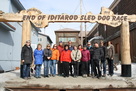
  • Take a summer dogsled ride at the Iditarod Sled Dog Race headquarters, and visit the Palmer Hay Flats State Game Refuge afterwards to bird-watch.
  • Drive out from Nome on the Council Highway to the Safety Sound Bridge, and walk the beach in the Alaska Maritime National Wildlife Refuge.


…THREE DAYS

  • Backpack over the Crow Pass segment from
    Girdwood to the Eagle River Nature Center.
  • Camp overnight in a yurt at the Eagle River Nature Center.
  • Fly mountain bikes to Takotna and ride the
    state highways to the Ophir goldfields.
  • Fish for silver salmon on the Unalakleet River
    on the Kaltag Portage.


...A WEEK OR MORE

  • Fly into the BLM Rohn Shelter Cabin and backpack 40 miles over Rainy Pass for a floatplane pick up near Puntilla Lake.
  • Float the winding rivers to and from remote floatplane pick up points in Innoko National Wildlife Refuge.


Welcome
to Alaska’s National Historic Trail!
National Historic Trails commemorate major routes of exploration, migration, trade, and military actions that formed America. Across America, only 17 trails have been honored as National Historic Trails. The Iditarod is
the only Alaska trail and the only winter trail. Moreover, the Iditarod is the only historic trail celebrating the indispensable role played by ‘man’s best friend’ in the
settlement of our state.

Given the broad swath of geography the Iditarod Trail crosses, it’s only natural that a lot of different landowners are involved. The U.S. Bureau of Land Management was appointed in the National Trails Act to coordinate the efforts of federal and state land managers on behalf of the trail, along with volunteer efforts. As you get out on the trail, I encourage you to support the local groups that do so much for this trail. Mush on!

Gary Reimer
BLM Anchorage District Manager


Why You Don’t Want to Walk to Nome  
(in the Summer)
Five hundred miles of swamp and anklebusting tussocks. Clouds of mosquitoes. Enough creek and river crossings to make you want to grow webbed feet.

Much of the country crossed by the historic Iditarod Trail is flat, boggy basins lined with permafrost and punctuated with black spruce. There’s a reason the old-timers rode the steamers up and down the Yukon and Kuskokwim rivers in the summer. There are good stretches of high country that will give you a taste of the trail (some listed on this web page), but if you want to seek out the flats, know before you go!


Tripods Lead
to Safety

For the past century, wooden tripods have
been placed at close intervals along treeless
sections of the Iditarod Trail to guide
travelers safely through blizzards. A 1912
article titled “Trail Making in Alaska”
described how Colonel Goodwin, leader of
the Alaska Road Commission expedition to
mark the trail from Seward to Nome,
constructed the tripods:

“…tripods…consisted of three sticks of
timber each, two of which were eight feet
long and the third ten or eleven feet long.
They are so fastened together that the longest
of the tree sticks projects two or three foot
over the others and directly above the trail.”

The same design is still in use today,
with volunteer groups and public land
managers working to provide these safety
markers over hundreds of miles of the trail.


...more info
coming soon!


Iditarod National Historic Trail
PO Box 2323
Seward, Alaska 99664


This web site is in the process of updating - please check back soon!